 Maria Paraskevopoulou, Dermatologist - Venereologist
Last updated:
Karisma Rh Collagen
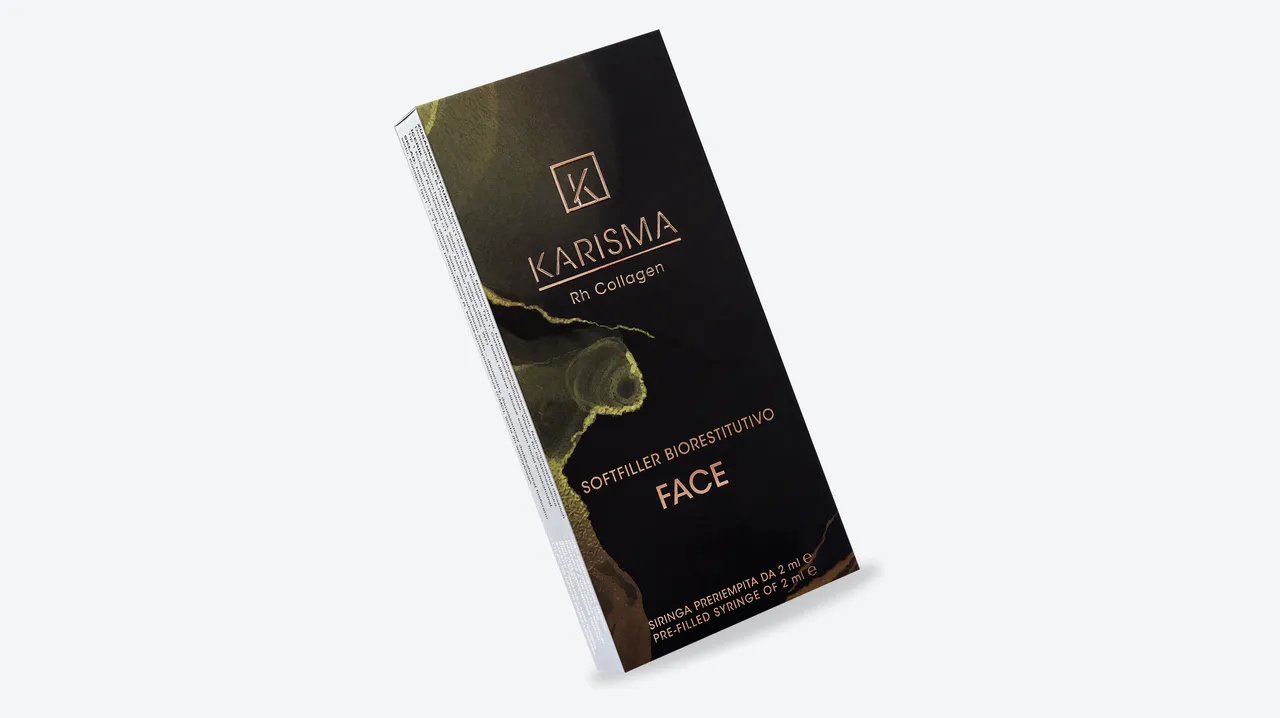
Karisma Rh Collagen is an injectable bio-restitutive soft filler that combines recombinant human type I collagen, high-molecular-weight hyaluronic acid and carboxymethyl cellulose. It does not add volume; it stimulates the skin to produce its own collagen, improving firmness, elasticity, fine lines and texture, with a natural result.
Type I collagen is the skin’s main “framework”. After 25–30, its production gradually declines, while sun, smoking and stress speed up its loss. Karisma uses a collagen fragment identical to human collagen as a “signal” for the skin to start producing collagen again. At UniqSkin we choose it when the goal is to genuinely rebuild skin quality — not just hydrate it.
What is Karisma Rh Collagen?
Karisma Rh Collagen is a class III medical device made by the Italian company Taumedika. It belongs to the so-called bio-restitutive products: unlike classic fillers, it does not mechanically “fill” wrinkles or hollows, but activates the skin’s natural repair mechanisms.
The “Rh” in its name stands for recombinant human — recombinant human collagen.
What is recombinant collagen?
The collagen in Karisma is the alpha-1 chain of type I collagen, with a structure 99.9% identical to human collagen. It is produced with a patented biotechnology method using silkworms, which secrete it into their cocoons — not from animal tissue, as older collagen products were.
This has two important advantages:
- A very low risk of allergy, as the body “recognises” it as its own.
- Immediate bioavailability, as it is water-soluble and in single-chain form, ready to act.
How it works
Karisma combines three ingredients, each with a different role:
- Recombinant type I collagen: acts as a signal to fibroblasts, triggering the synthesis of new collagen (neocollagenesis) and the remodelling of the dermis.
- High-molecular-weight hyaluronic acid, not chemically cross-linked: provides deep hydration and a favourable environment for skin regeneration.
- Carboxymethyl cellulose (CMC): a biocompatible polymer that inhibits hyaluronidase, the enzyme that breaks down hyaluronic acid. As a result, the hyaluronic acid stays in the tissues for longer.
The result is a gradual rebuilding of the skin from within: denser, more elastic, smoother skin, without changing your facial features.
What it treats
Karisma is suitable for:
- Laxity and loss of firmness.
- Fine lines and wrinkles, such as upper-lip (“smoker’s”) lines.
- Photo-ageing: dull, sun-damaged skin.
- Dry, dehydrated skin with poor texture.
- Acne scars and small scars.
Treatment areas
- Face
- Neck
- Décolletage
- Back of the hands
Who it is for
Karisma is aimed at men and women, usually from age 30 onwards, who want to improve the quality and firmness of their skin naturally. It is particularly useful:
- For skin with marked photo-ageing, or for smokers.
- When the skin has thinned and lost density.
- For anyone who wants improvement without added volume.
The benefits
- New collagen, produced naturally and gradually.
- Firmness and a better-defined contour.
- Elasticity and a smoother texture.
- Deep hydration and radiance.
- Hypoallergenic and biocompatible.
- A natural result, without changing your features.
Karisma or Profhilo?
Both treatments improve skin quality without adding volume, but in different ways:
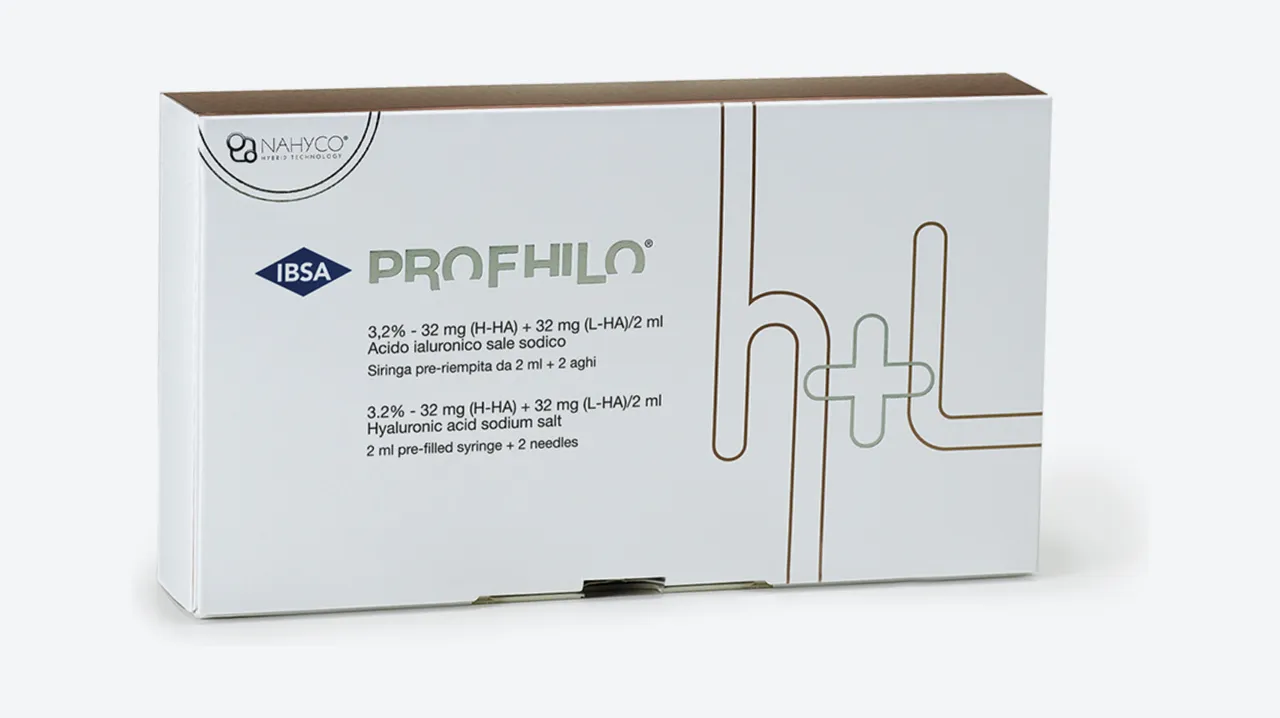
- Profhilo contains only high-concentration pure hyaluronic acid and mainly targets hydration and bio-remodelling of the skin.
- Karisma adds recombinant collagen and carboxymethyl cellulose, with an emphasis on rebuilding the dermis and producing new collagen.
The choice depends on your skin’s needs, and we will discuss it together during your medical assessment. See also the other skin boosters we use.
The procedure
- Assessment: We assess your skin quality, the degree of laxity and your goals.
- Preparation: The skin is cleansed and an anaesthetic cream is applied for about 20–30 minutes.
- Injection: Karisma is applied with a combination of two techniques: a micro-cannula, which spreads the product evenly over larger areas with very few entry points, and small injections with a very fine needle, for more targeted application where needed.
- Duration: About 30 minutes.
- Protocol: The initial course consists of 2 sessions one month apart, often followed by a third after about 4 months. Maintenance sessions follow every 4–6 months.
- Results: Hydration shows within the first few days. Improvements in texture, firmness and fine lines develop gradually over the following weeks as new collagen is produced, peaking after the second session.
What the research says
In a 2024 clinical study of 100 patients aged 27–70, who received 2 Karisma sessions one month apart, a measurable reduction in wrinkle depth was recorded with 3D skin analysis, along with a significant improvement in patient satisfaction. The results covered photo-aged skin, smokers and patients with acne scars. The researchers note that the study had no control group and that longer-term studies are needed (Di Rosa et al., 2024).
Before and after the treatment
Before:
- Avoid alcohol for 24 hours before the session.
- If you take aspirin, anti-inflammatory or anticoagulant medication, let us know — do not stop it without your doctor’s advice.
- Come without make-up.
After:
- Avoid make-up for 12–24 hours.
- Avoid intense exercise for 24 hours.
- Avoid saunas, heat and sun for a few days, and use sunscreen.
- You can return to your daily activities straight away.
Combining with other treatments
Karisma combines beautifully with:
- Botox, for expression lines.
- Fillers, when targeted volume restoration is also needed.
- Microneedling with Dermapen, for acne scars and better texture.
- LED phototherapy (Dermalux), for soothing and radiance.
Safety
Karisma is biocompatible and hypoallergenic, with a safety profile similar to hyaluronic acid. After treatment, small wheals appear at the injection points and settle within 12–24 hours. Bruising is relatively common, and there may be swelling for 1–2 days; all of this resolves fully, usually within a week. A medical assessment always comes first; the treatment is not recommended in cases of active infection or inflammation in the area, pregnancy/breastfeeding, bleeding disorders or a known allergy to any of the ingredients.
Frequently Asked Questions
-
Is it a filler?
It is described as a “soft filler”, but it does not work like classic fillers: it does not add volume, but stimulates the skin to produce its own collagen.
-
Is the collagen of animal origin?
No. It is recombinant collagen, 99.9% identical to human collagen, produced through biotechnology — which is why the risk of allergy is very low.
-
Does it hurt?
The treatment is well tolerated, as an anaesthetic cream is applied first and very fine needles are used.
-
How many sessions do I need?
Usually 2 sessions one month apart, often a third after about 4 months, followed by maintenance every 4–6 months.
-
When will I see results?
Hydration shows immediately, while firmness and texture improve gradually over the following weeks as the skin produces new collagen.
-
Karisma or Profhilo?
Both improve skin quality without volume. Profhilo relies on hyaluronic acid alone, while Karisma adds recombinant collagen to rebuild the dermis. A medical assessment will show which suits you.
References
- Di Rosa L, De Pasquale A, Baldassano S, et al. New Regenerative and Anti-Aging Medicine Approach Based on Single-Stranded Alpha-1 Collagen for Neo-Collagenesis Induction: Clinical and Instrumental Experience of a New Injective Polycomponent Formulation for Dermal Regeneration. Biomedicines. 2024;12(4):916. doi:10.3390/biomedicines12040916
Conclusion
Karisma Rh Collagen brings something new to skin rejuvenation: recombinant human collagen that “wakes up” your own collagen production, combined with hyaluronic acid for hydration. The result is firmer, more elastic and smoother skin, in a completely natural way. At UniqSkin we design a personalised protocol, on its own or combined with other treatments, for the best possible results.