Eczema
The term “eczema” refers to a group of inflammatory skin conditions characterized by redness, itching, dryness and rash. It is one of the most common skin conditions, affecting people of all ages, and is estimated to impact approximately 10-20% of the population. Although the term is often used interchangeably with atopic dermatitis, it actually encompasses several different types of dermatitis.
Types of eczema
- Atopic eczema (atopic dermatitis): The most common type. It is associated with genetic predisposition and atopic history (asthma, allergic rhinitis). It often appears from infancy but can persist or develop in adulthood.
- Contact dermatitis: Caused by direct skin contact with irritants (irritant dermatitis) or allergens (allergic contact dermatitis). Common triggers include soaps, detergents, sweat and certain metals (e.g. nickel).
- Nummular eczema: Characterized by round or oval-shaped patches of eczematous lesions that resemble coins. It primarily appears on the lower extremities and can be triggered by skin dryness or injuries.
- Dyshidrotic eczema: Manifests as small fluid-filled blisters on the palms, fingers and soles. It causes intense itching and may be associated with seasonal changes or stress.
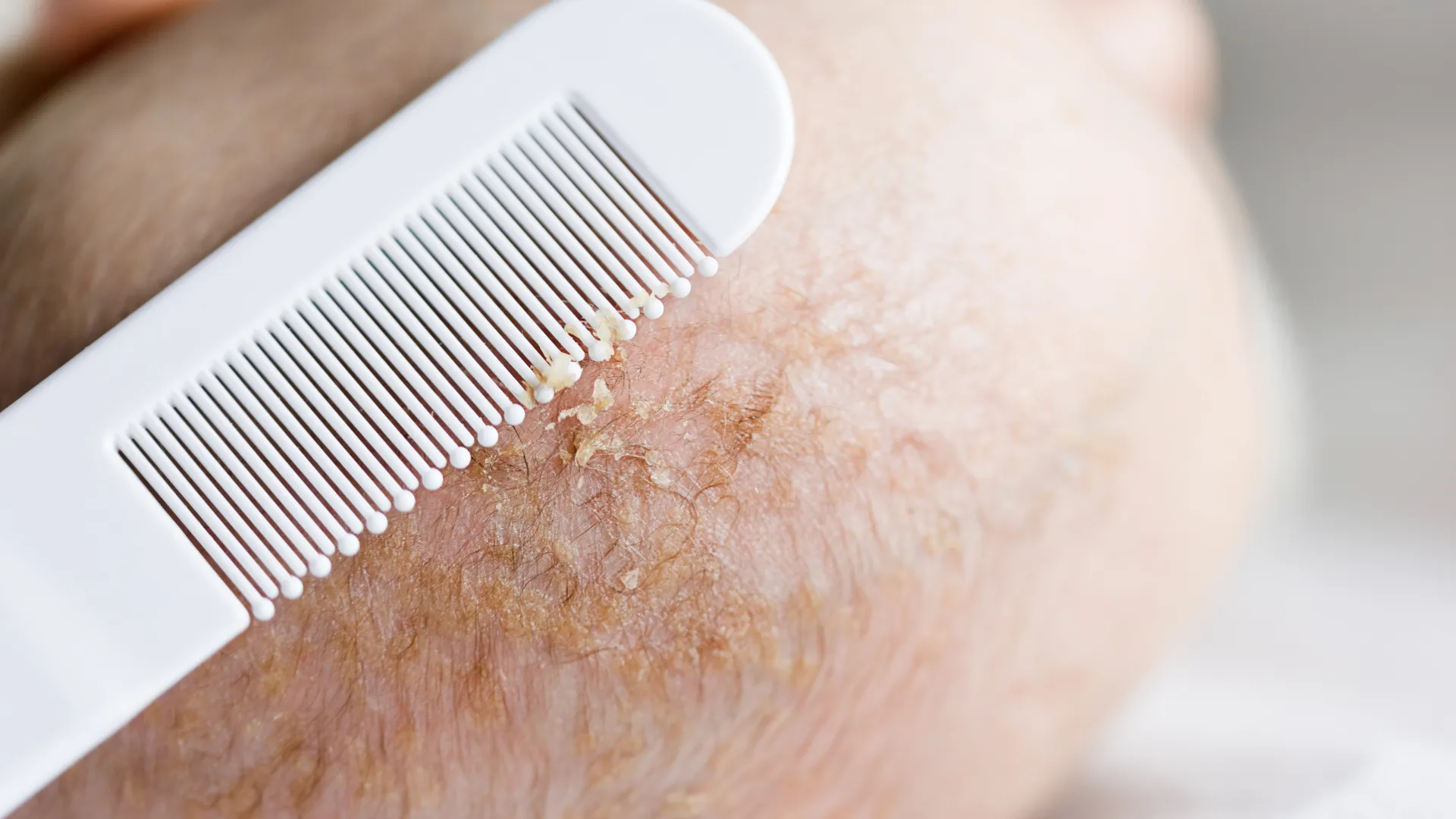
- Seborrheic eczema: Appears in areas rich in sebaceous glands, such as the scalp (known as cradle cap in infants), eyebrows and nasolabial folds.
Causes and risk factors
The exact etiology of eczema is multifactorial and involves the combined action of genetic, immunological and environmental factors:
- Genetic predisposition: Mutations in the filaggrin gene (FLG), a protein critical for the structure and function of the epidermal barrier, facilitate the penetration of allergens and irritants into the skin.
- Skin barrier dysfunction: Individuals with eczema exhibit reduced production of ceramides and natural moisturizing factors, leading to increased transepidermal water loss.
- Immune dysregulation: Overactivity of type 2 T-lymphocytes (Th2) and increased immunoglobulin E (IgE) production are associated with the inflammatory response in the skin.
- Environmental factors: Pollution, low humidity, extreme temperatures, allergens (dust mites, pollen, animal dander) and microbial colonization (primarily Staphylococcus aureus).
Symptoms
Symptoms of eczema vary depending on the type and phase of the condition:
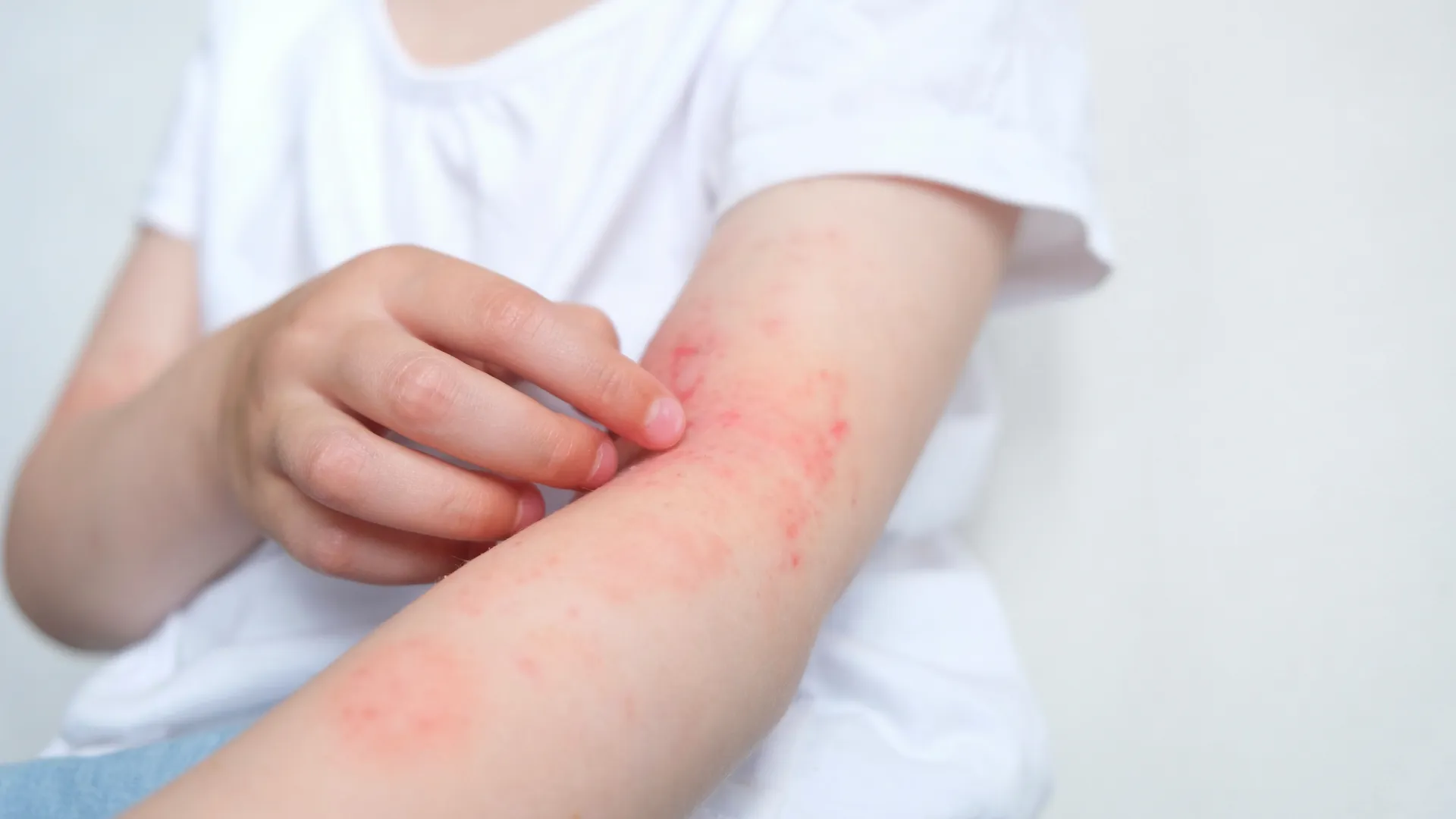
- Itching: The primary symptom, often more intense at night, which can disrupt sleep and affect quality of life.
- Redness and swelling: Inflammation of the skin in various areas of the body.
- Dryness and scaling: The skin becomes rough, hard and develops scales.
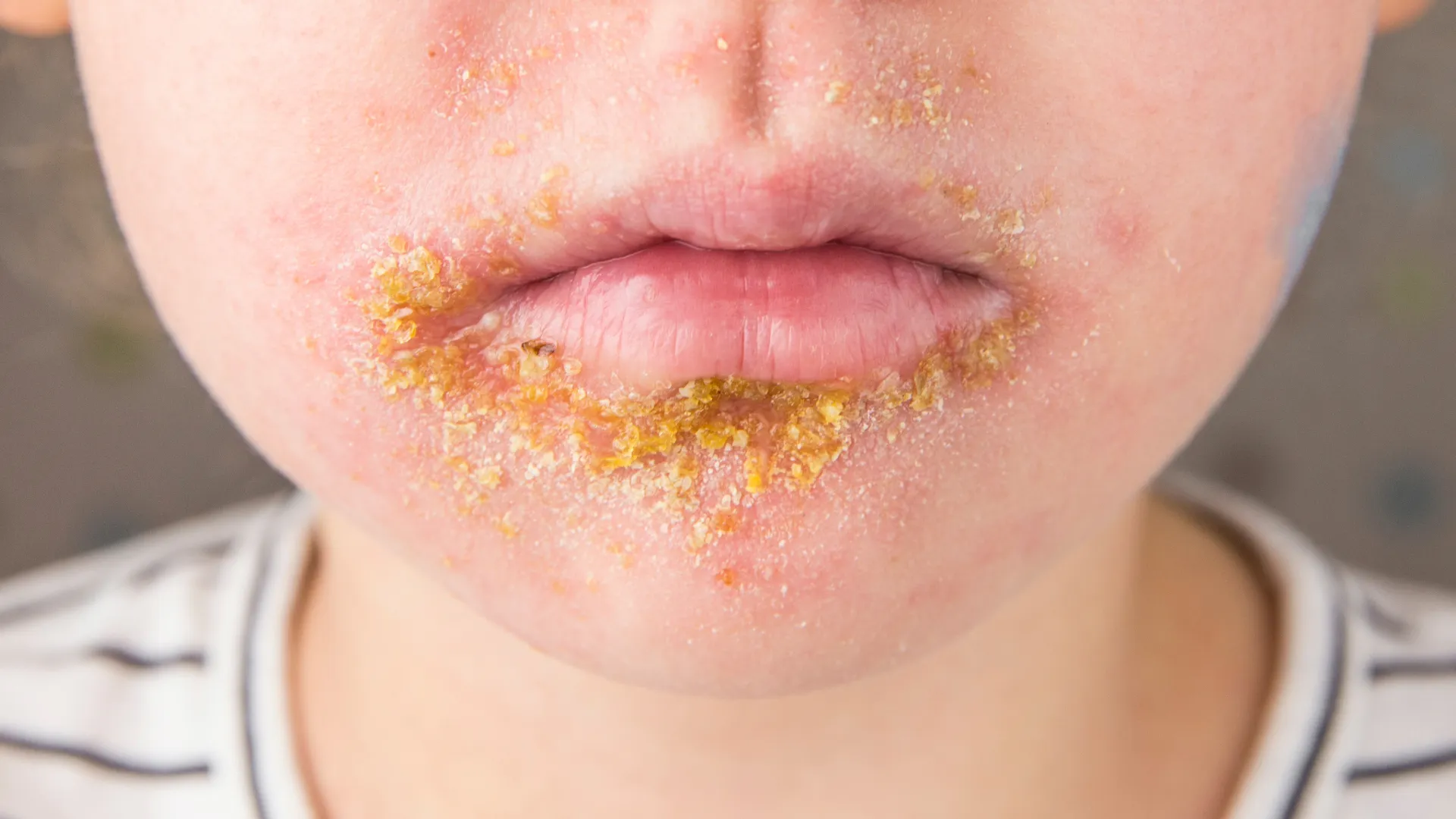
- Blisters and oozing: In acute phases, small blisters that release fluid may appear.
- Lichenification: In chronic cases, the skin thickens and develops an enhanced textured appearance due to persistent scratching.
Diagnosis
Eczema diagnosis is primarily based on clinical examination by a dermatologist. Laboratory testing is not usually required, but in certain cases the following may be requested:
- Patch tests: To investigate allergic contact dermatitis.
- Blood tests: Measurement of total IgE and specific IgE antibodies to rule out atopy.
- Skin biopsy: Rarely, in cases of unclear clinical presentation.
Treatment
The therapeutic management of eczema follows a stepwise approach:
- Moisturization and skin barrier repair: Daily use of emollients is the cornerstone of treatment. Emollients should be applied at least twice daily and immediately after bathing on slightly damp skin.
- Topical corticosteroids: Used during flare-ups to reduce inflammation. The choice of potency depends on severity, the patient’s age and the anatomical location of lesions. Low-potency preparations are preferred for the face and skin folds.
- Topical calcineurin inhibitors: Tacrolimus and pimecrolimus provide an alternative treatment, particularly for sensitive areas (face, eyelids, genital area) where long-term corticosteroid use is not indicated.
- Antihistamines: First-generation antihistamines may be used primarily for nighttime itching due to their sedative effect.
- Antibiotics: In cases of secondary bacterial infection, topical or systemic antibiotic therapy may be necessary.
- Wet wraps: An effective technique during severe flare-ups, involving the application of wet dressings over topical preparations to improve absorption and relieve itching.
Prevention and care
Proper skin care can significantly reduce the frequency and severity of flare-ups:
- Daily moisturizing: Apply fragrance-free emollient cream or ointment generously at least twice daily.
- Proper bathing: Choose short baths (5-10 minutes) with lukewarm water. Use mild soap-free cleansers and avoid bubble baths.
- Appropriate clothing: Choose soft cotton fabrics. Avoid wool, synthetic materials and clothes with rough labels.
- Environmental control: Maintain stable temperature and humidity at home. Use a humidifier during winter months.
- Avoidance of known triggers: Keep a flare-up diary to identify factors that worsen the eczema.
- Nail care: Keep nails short and filed to prevent scratching injuries.
Prognosis
The prognosis for eczema depends on the type and severity of the condition. In many cases, symptoms improve significantly with appropriate treatment, while in some patients the condition may follow a cyclical course with periods of remission and flare-ups. Consistent management, in collaboration with a dermatologist, can significantly improve the course of the disease and the patient’s quality of life.