 Maria Paraskevopoulou, Dermatologist - Venereologist
Last updated:
Skin Cancer
Skin cancer is the most common type of cancer in humans, and it is becoming more common every year. It develops when skin cells multiply uncontrollably, mainly because of damage caused by ultraviolet (UV) radiation. Most importantly, when it is diagnosed early, the vast majority of cases can be cured.
Types of skin cancer
Skin cancers fall into two main categories: non-melanoma skin cancers (NMSC), which are the most common, and melanoma, which is rarer but more dangerous.
Basal Cell Carcinoma (BCC)
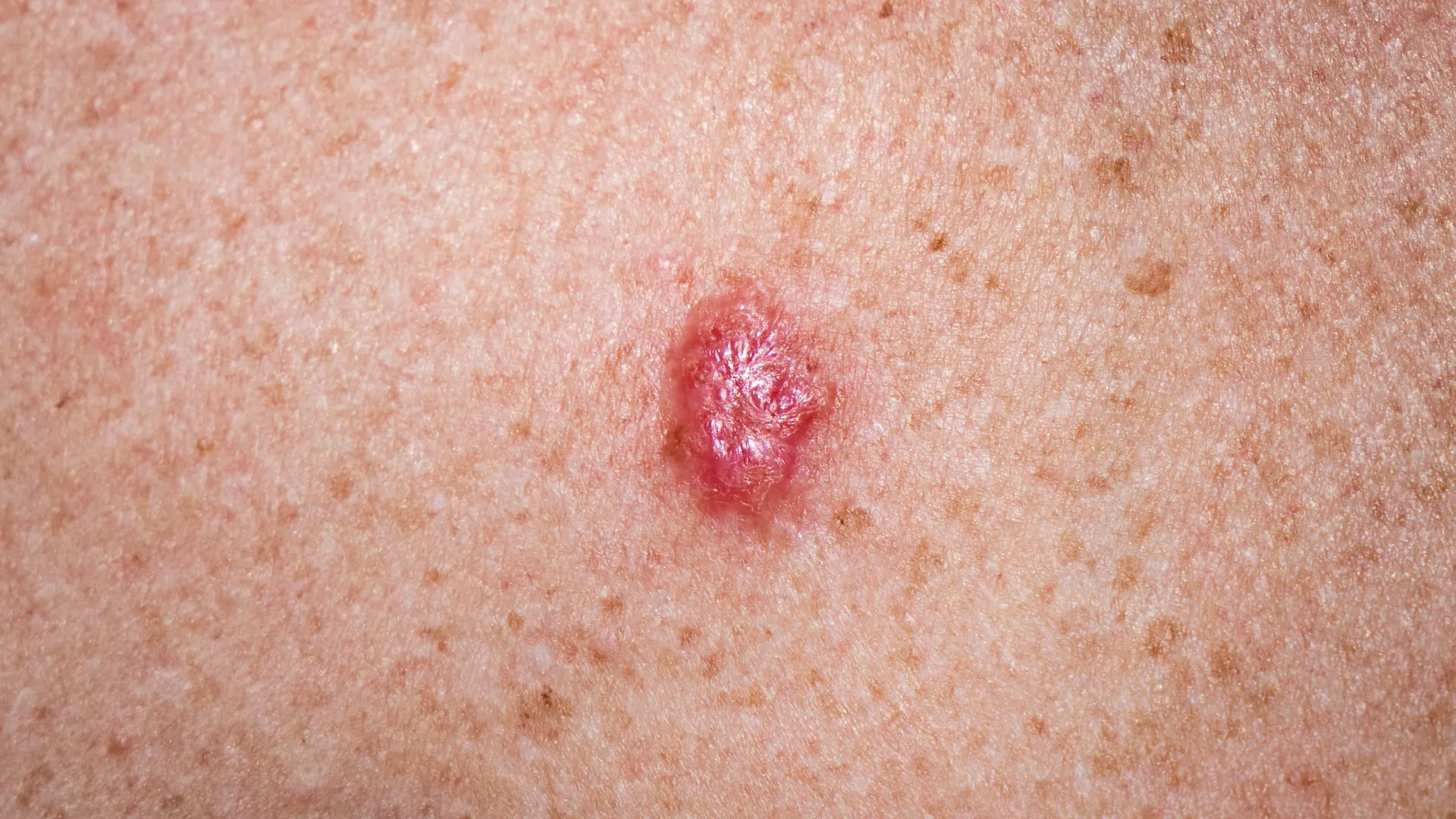
It is the most common type of skin cancer, accounting for about 8 in 10 cases. It usually appears as a pink, pearly bump or as a sore that does not heal, mostly on the face. It grows slowly and rarely spreads, but it can destroy the surrounding tissue if left untreated. Read more in the article on Basal Cell Carcinoma.
Squamous Cell Carcinoma (SCC)
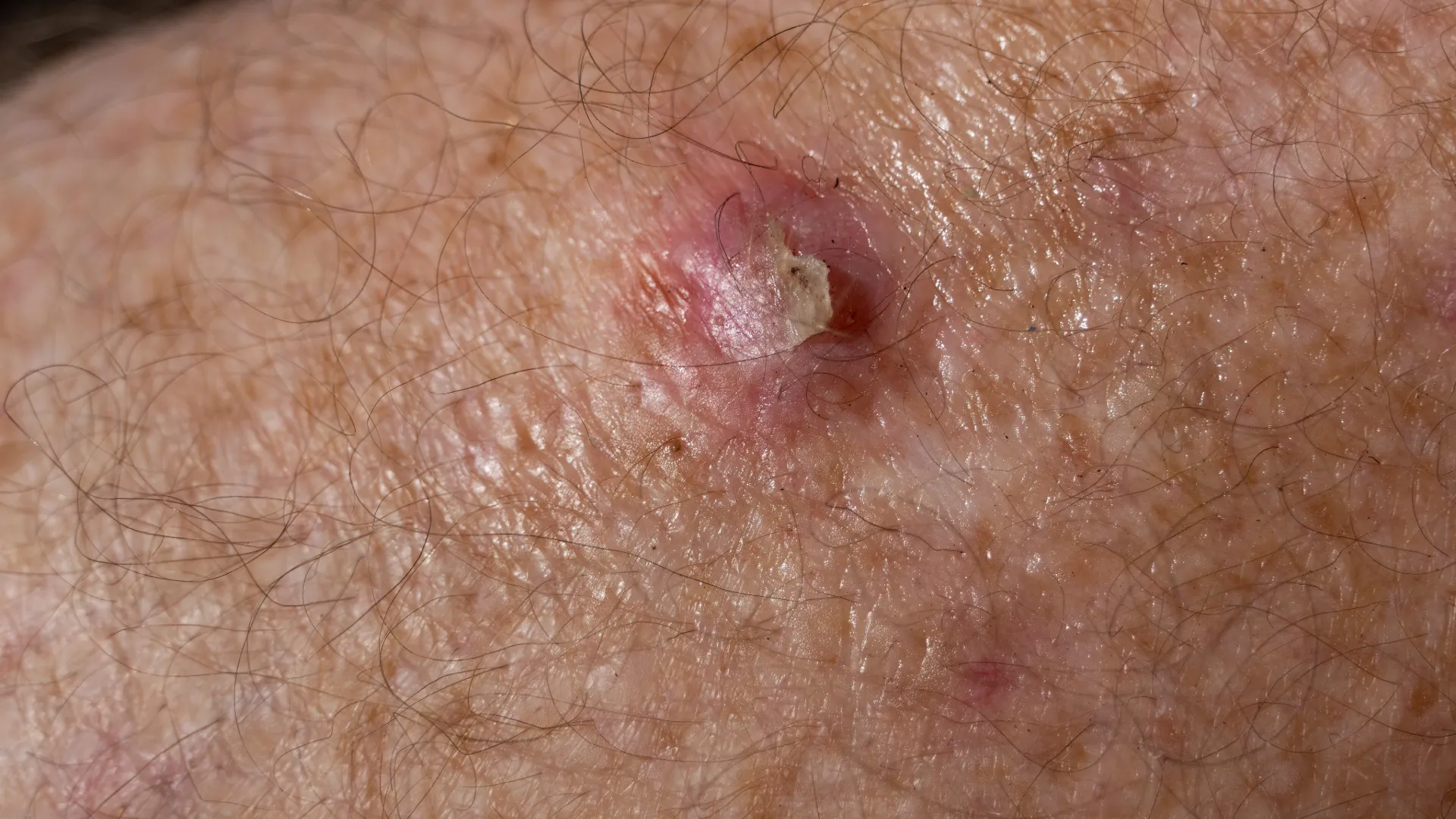
It is the second most common skin cancer. It appears as a firm, scaly or ulcerated lump on sun-exposed areas such as the face, ears, lips and the backs of the hands. It grows faster than BCC and, in some cases, can spread. Read more in the article on Squamous Cell Carcinoma.
Melanoma
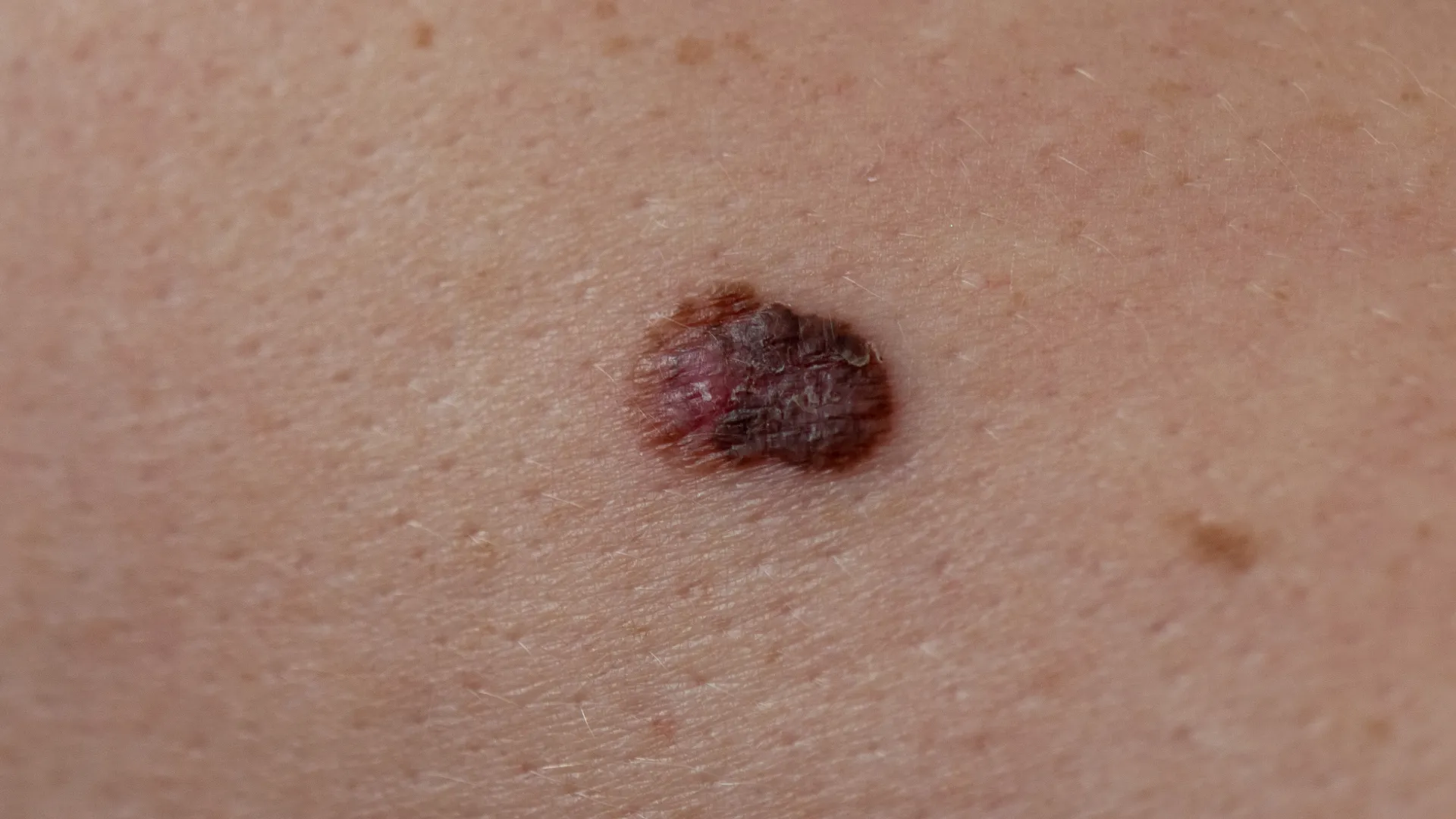
It develops in melanocytes, the cells that give the skin its colour. It usually appears as a new dark lesion or as a change in an existing mole. It is rarer than non-melanoma skin cancers but more dangerous, as it can spread early. Read more in the article on Melanoma.
Actinic keratosis
It is not a cancer but a precancerous lesion. It appears as a rough, scaly patch on skin that has been exposed to the sun for many years, such as the face, the scalp and the hands. A small percentage of these lesions can progress to squamous cell carcinoma, which is why it is important to treat them early.
Early warning signs
Any new lesion or any change in an existing skin lesion should be checked by a dermatologist. The signs to watch for are:
- A sore that does not heal: A lesion that bleeds, crusts over and does not close within a few weeks.
- A new lump: A shiny, pink or firm lesion that is growing.
- A scaly patch: A rough, red patch that persists.
- A changing mole: For moles, the ABCDE rule is used:
- A (Asymmetry): An asymmetrical shape.
- B (Border): Irregular or blurred borders.
- C (Color): Several shades of colour.
- D (Diameter): A diameter larger than 6 millimetres.
- E (Evolution): Any change in size, shape or colour.
- The “ugly duckling”: A mole that looks clearly different from the other moles on the body.
Risk factors
The main cause of skin cancer is ultraviolet (UV) radiation, either from the sun or from artificial sources such as tanning beds.
Risk factors include:
- Fair skin, light-coloured hair and eyes (skin types that burn easily).
- Long-term sun exposure, e.g. from working outdoors.
- A history of severe sunburns, especially in childhood.
- Use of tanning beds.
- A large number of moles or the presence of dysplastic moles.
- A personal or family history of skin cancer.
- A weakened immune system, e.g. after an organ transplant.
- Older age.
Diagnosis
Diagnosis begins with a clinical examination of the whole skin and dermoscopy, a painless examination with a special magnifying lens that lets the dermatologist see structures in the skin that are not visible to the naked eye. For people with many moles, mole mapping may also be done so that they can be monitored over time. When a lesion is suspicious, the diagnosis is confirmed with a skin biopsy and histological examination.
Treatment
Treatment depends on the type, size, depth and location of the lesion, as well as on the patient’s age and health. The main options are:
- Surgical excision: The most common treatment, in which the lesion is removed together with a margin of healthy skin.
- Cryosurgery: Destruction of the lesion with liquid nitrogen, suitable mainly for actinic keratoses and superficial forms. Read more in the article on cryosurgery.
- Topical treatments: Creams applied by the patient at home for superficial lesions and actinic keratoses.
- Other treatments: In the rare advanced cases, treatment is planned together with an oncologist.
Prevention
Skin cancer is largely preventable. The key preventive measures include:
- Sunscreen: Apply SPF 30 or higher every day and reapply every two hours when you are in the sun.
- Sun protection: Wear hats, sunglasses and UV-protective clothing, and avoid the midday sun.
- Avoid tanning beds
- Protect children: Sunburns in childhood significantly increase the risk later in life.
- Regular self-examination: Check your skin every month, using a mirror or asking a loved one to check the areas you cannot see.
Mole checks at our clinic
Early diagnosis is the most important weapon against skin cancer. An annual mole check with dermoscopy is recommended for everyone, and more frequent checks for high-risk groups, for whom mole mapping is also done where necessary, so that changes can be recorded and compared over time. At our clinic in Anixi, dermatologist Maria Paraskevopoulou, who completed her specialty training at Andreas Syggros Hospital, examines your whole skin, assesses every suspicious lesion and, where needed, performs a biopsy or removes the lesion. You can read more about moles and how they are checked in the article on moles.
References
- Garbe C, Amaral T, Peris K, et al. European consensus-based interdisciplinary guideline for melanoma. Part 1: Diagnostics: Update 2022. European Journal of Cancer. 2022;170:236-255. doi:10.1016/j.ejca.2022.03.008
- Peris K, Fargnoli MC, Kaufmann R, et al. European consensus-based interdisciplinary guideline for diagnosis and treatment of basal cell carcinoma—update 2023. European Journal of Cancer. 2023;192:113254. doi:10.1016/j.ejca.2023.113254
- Stratigos AJ, Garbe C, Dessinioti C, et al. European consensus-based interdisciplinary guideline for invasive cutaneous squamous cell carcinoma. Part 1: Diagnostics and prevention – Update 2023. European Journal of Cancer. 2023;193:113251. doi:10.1016/j.ejca.2023.113251